
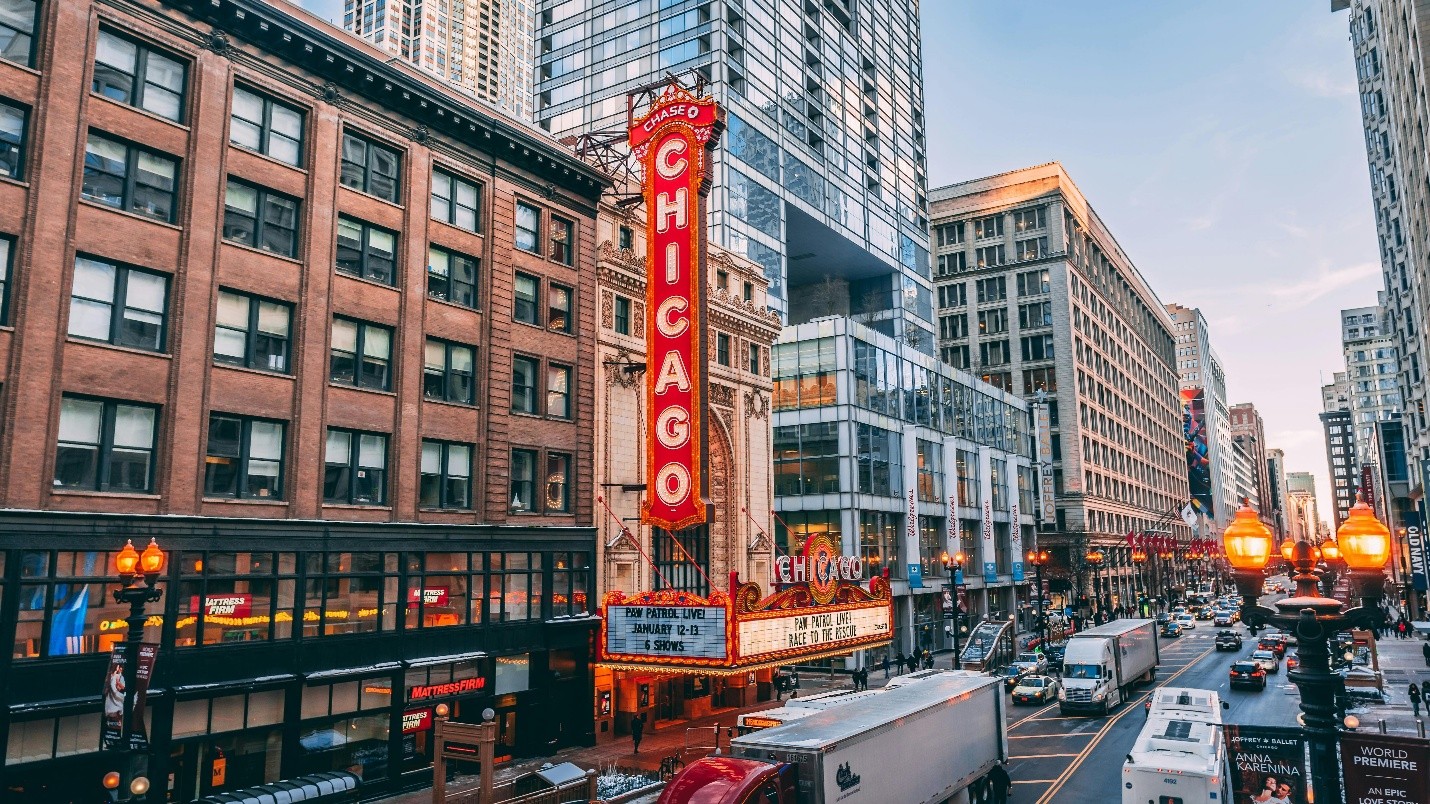
When she was a freshman in high school, Suzet McKinney and her friends would take the 126 Jackson bus to the two-story McDonald’s at the corner of State Street and Jackson Boulevard downtown. They’d get French fries and walk up and down State Street to window-shop and people-watch.
“The street was alive,” the Chicago Loop Alliance CEO said. “It was vibrancy, it was energy, it was currency. It was all of those things. People were spending money, they were visiting, they were enjoying the energy of the Loop, and specifically State Street.”
After a global pandemic and a wave of retailer departures, the Loop’s premier shopping corridor has lost the vibrancy that Chicagoans who grew up going downtown to look at the Marshall Field’s window displays remember. But signs of recovery are emerging. The street’s retail vacancy rate dropped by more than six percentage points in 2025, after climbing since 2020, and new and returning retailers are bringing some much-needed energy to the strip.
State Street’s retail vacancy rate was 28.8% in 2025, down from 35.1% in 2024, according to data from Chicago-based retail brokerage Stone Real Estate. That’s still nearly double the 2019 vacancy rate of 15.2%, and market players say the corridor is a few years away from a full recovery. Retail rents are still down from pre-pandemic levels, and properties that have traded have sold at huge discounts.
McKinney, who took the helm of the downtown business group in May after working in real estate for more than a decade, said the value reset concerns her because it shifts more of the property tax burden to other neighborhoods. That’s part of why revitalizing the Loop is important for the city as a whole, she said.
New life for an old mall
The lower value basis provides an opportunity for firms such as Orland Park-based Edwards Realty, which bought the Block 37 shopping mall at 108 N. State St. for about 36% of its previous sale price. The firm plans to spend between $25 million and $30 million on a phased turnaround plan for the property, Edwards Realty President Ramzi Hassan told Crain’s after the sale closed earlier this month.
“You have a huge market here. You have an undervalued and really under-appreciated asset on State Street, which is a world-renowned thoroughfare, and it doesn’t really have an identity like it did before,” he said.
Block 37 is the Loop’s largest retail property and is about 65% occupied today. The mall’s struggles predate the COVID-19 pandemic: It opened in the depths of the financial crisis in 2009 and quickly landed in foreclosure. Hassan said its success depends on engaging with the surrounding community.
“You have to keep people engaged and give them reasons to come back. I think the old shopping center format is a little antiquated now,” he said.
Edwards Realty’s goal is to make the mall an experiential destination through nontraditional retail uses in addition to the existing soft goods ones as well as performances and art installations.
Population boom on the horizon
Hassan also noted the Loop’s residential population is poised to expand, with hundreds of people expected to move into downtown office buildings being converted into apartments.
Those new residents could boost downtown retailers, which also depend on Loop office workers. Office vacancy in the central business district is roughly double its pre-pandemic level, though the market could be stabilizing with the rate ticking down slightly two quarters in a row, according to data from real estate services firm CBRE.
Also expected to boost the Loop is Google moving its workforce of more than 2,500 to the revamped Thompson Center at Clark and Randolph streets, which is set to open in 2028.
“Businesses are starting to catch on that there is a bit of a movement back to the Loop,” McKinney said.
New retailers that have opened recently on State Street include Barnes & Noble, which gave the corridor its largest lease in years with a 31,000-square-foot flagship at 150 N. State St., as well as a Gap factory store at 17 N. State St. That store, as well as a planned outlet from another Gap Inc. brand, Old Navy, at 20 S. State St., show the company is recommitting to the strip after closing prominent flagships, albeit with smaller discount stores. A third-quarter Chicago Loop Alliance report also noted new independent retailers Mood Fabrics and gift shop Raygun.
“There’s tenant activity, but it’s not as robust as what you’re seeing on Michigan Avenue,” said Newmark investment sales broker Keely Polczynski, who represented former Block 37 owner CIM Group in the sale to Edwards Realty, noting the other downtown shopping corridor is further along in its recovery trajectory.
But Polczynski said her leasing broker colleagues are hearing from a lot of national brands, including fast casual restaurants, that are interested in a State Street presence.
“They follow each other, which means that the ones that are there are performing,” she said.
Polczynski said she anticipates the retail on State Street will become more concentrated, centering around Block 37 and State and Madison streets, before more activity spreads to the northernmost and southernmost ends of the corridor.
“I’m bullish on what it can become,” she said. “It’s just going to take a little time.”